
The Custom Apparel Checklist: What Every Business Actually Needs Before Ordering
- Janet Emma
- Mar 4
- 4 min read

Professional custom apparel requires preparation. High-quality results are not accidental. After 25 years in the printing industry, Hard Re-Set Inc. has identified the specific requirements necessary for a successful production run. This checklist eliminates errors, reduces turnaround time, and ensures financial efficiency.
1. High-Resolution Design Assets
The quality of the print is limited by the quality of the file. Low-resolution images produce blurry or pixelated results. Hard Re-Set Inc. requires specific file formats to maintain professional standards.
Vector Graphics
Vector files (AI, EPS, or PDF) are composed of mathematical paths. They can be scaled to any size: from a business card to a scrim vinyl banner: without losing clarity.
Requirement: All logos should be in vector format.
Fonts: Convert all text to outlines or paths to prevent font substitution errors.
Colors: Specify Pantone (PMS) codes if exact color matching is required for brand consistency.
Raster Images
If using photographs or complex digital art, the file must be high-resolution.
Requirement: Minimum 300 DPI (Dots Per Inch) at the actual print size.
Format: PNG with a transparent background is preferred for Direct-to-Garment (DTG) printing.
Avoid: Small JPEGs pulled from social media or website screenshots. These are unusable for professional apparel.
2. Definitive Product Selection
Choosing the right garment affects the longevity of the print and the comfort of the wearer. Hard Re-Set Inc. provides various options including t-shirts, hoodies, and specialized workwear.
Material Composition
100% Cotton: Ideal for DTG printing and high-vibrancy silk screen results.
Polyester Blends: Necessary for moisture-wicking performance gear but requires specific ink additives.
Heavyweight Fleece: Recommended for streetwear staples to ensure durability and structure.
Technical Specifications
Before ordering, define the following:
GSM (Grams per Square Meter): Determines fabric thickness. Higher GSM equals a heavier, more premium feel.
Fit: Standard, slim, or oversized.
Tagging: Decide if you require custom neck labels or if the manufacturer's tags are acceptable.
3. Accurate Quantity and Sizing Distribution
Guessing sizes leads to dead inventory or missed sales. A "Size Curve" is the distribution of sizes within a total order quantity.
Establishing the Size Curve
A standard retail size curve typically follows a bell curve:
Small: 10%
Medium: 25%
Large: 30%
XL: 25%
2XL+: 10%
Adjust these percentages based on your target demographic. Fitness brands may skew toward smaller, athletic fits; construction or trade businesses often require more XL and 2XL options.
Minimum Order Quantities (MOQs)
Hard Re-Set Inc. offers flexibility with no minimums on many services. However, bulk ordering reduces the unit cost.
Action: Determine your total budget.
Action: Calculate the price break points.
Action: Confirm the final count before production starts to avoid setup duplication.
4. Decoration Method Selection
The method used to apply your design depends on the artwork complexity, garment type, and quantity.
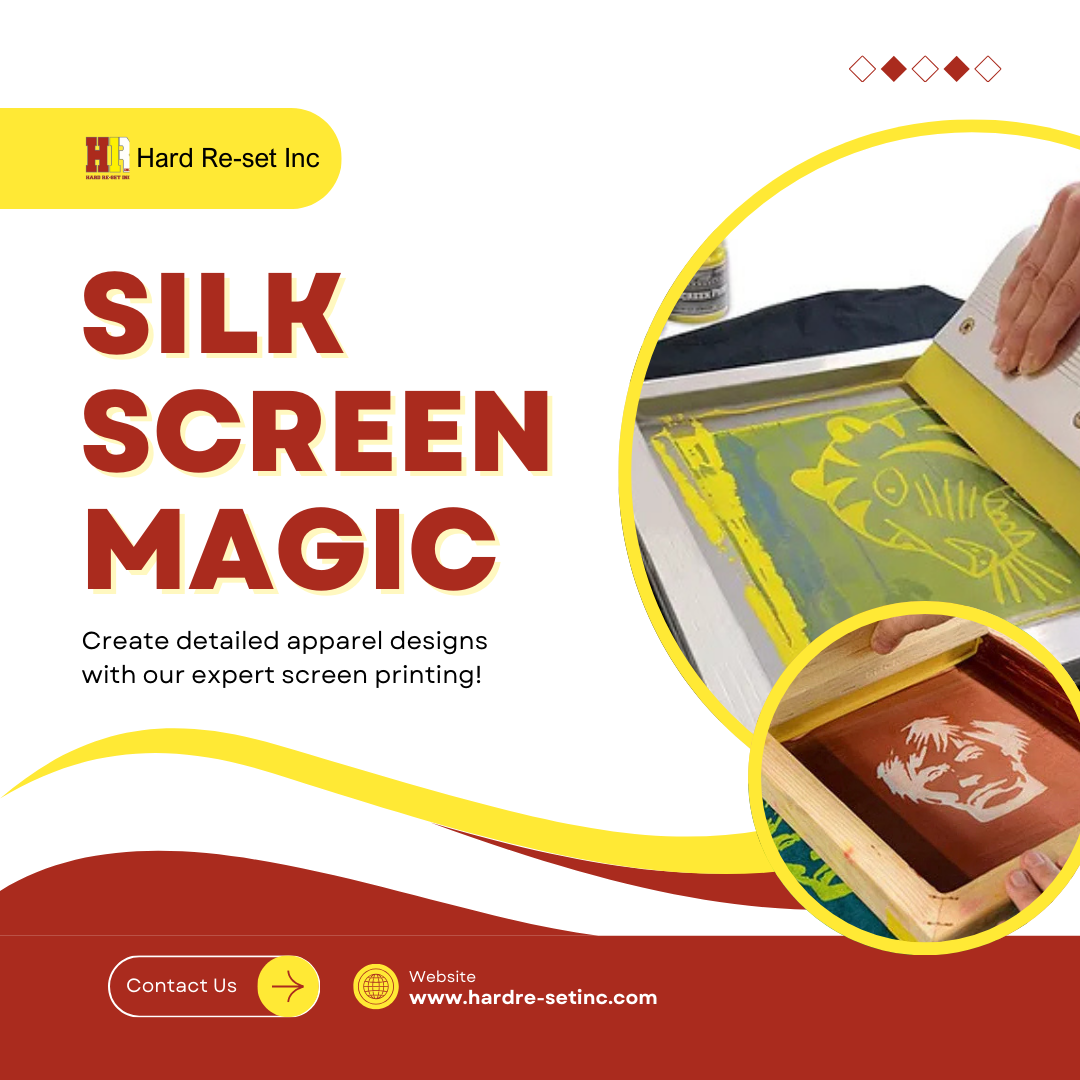
Silk Screen Printing
Best for high-volume orders with limited colors. It is durable and cost-effective for large batches.
Pros: Longevity, vibrant colors on dark fabrics, low unit cost at scale.
Cons: Higher initial setup effort for multi-color designs.
Direct-to-Garment (DTG)
Ideal for detailed artwork, photographs, and small runs. It functions like an inkjet printer for fabric.
Pros: No color limits, no setup fees, high detail.
Cons: Best suited for high-cotton content fabrics.
Embroidery
Provides a professional, "heavy-duty" look. Best for hats, polos, and outerwear.
Pros: Premium aesthetic, extremely durable.
Cons: Not suitable for very fine details or thin fabrics.
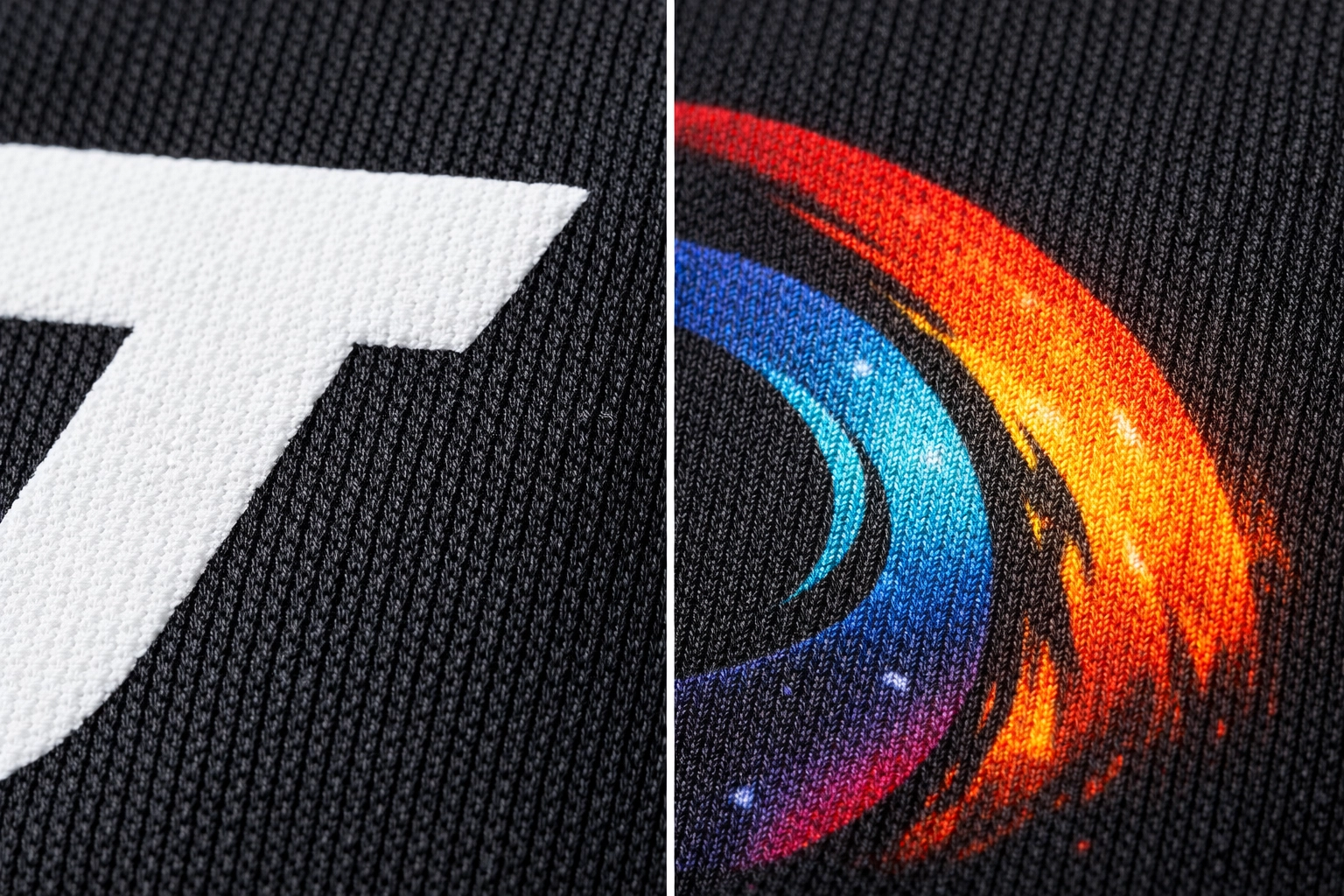
Caption: Technical comparison of Silk Screen vs. DTG print texture on 100% cotton fabric.
5. Budget Allocation and Cost of Goods Sold (COGS)
Transparency in pricing prevents project stalls. Your budget must account for more than just the "per shirt" price.
Total Cost Components
Blank Garment Cost: The price of the unprinted item.
Printing/Decoration Fee: Based on the number of locations and colors.
Setup Fees: Hard Re-Set Inc. minimizes these, but they are common in the industry.
Shipping and Handling: Inbound shipping of blanks and outbound shipping of finished goods.
Design Services: Fees for vectorizing low-res art or creating custom layouts.
Setting a Realistic Timeline
Standard production at Hard Re-Set Inc. is efficient, but quality takes time.
Requirement: Allow 7–10 business days for standard production.
Requirement: Factor in shipping time (3–5 business days).
Action: If you have a firm event date, communicate it immediately.
6. The Proofing and Approval Process
Never assume the final product will look exactly like a digital mockup without a formal proofing stage.
Digital Mockups
A digital mockup is a visual representation of the design placement on a garment.
Check: Print location (Chest, Back, Sleeve).
Check: Print dimensions (Standard chest print is 10-12 inches wide).
Check: Spelling and grammar.
Physical Samples
For large-scale production, a physical sample (Pre-Production or "PP" sample) is recommended. This allows you to verify fabric feel and print accuracy before the full run is executed.
Warning: Making changes after the PP sample is approved will incur additional costs and delays.
7. Delivery and Logistics
Determine how the finished goods will be handled once production is complete.
Bulk Delivery: Single shipment to one business location.
Individual Fulfillment: Shipping directly to employees or customers (Print-on-Demand style).
Pick-up: Local pickup options to save on shipping costs.
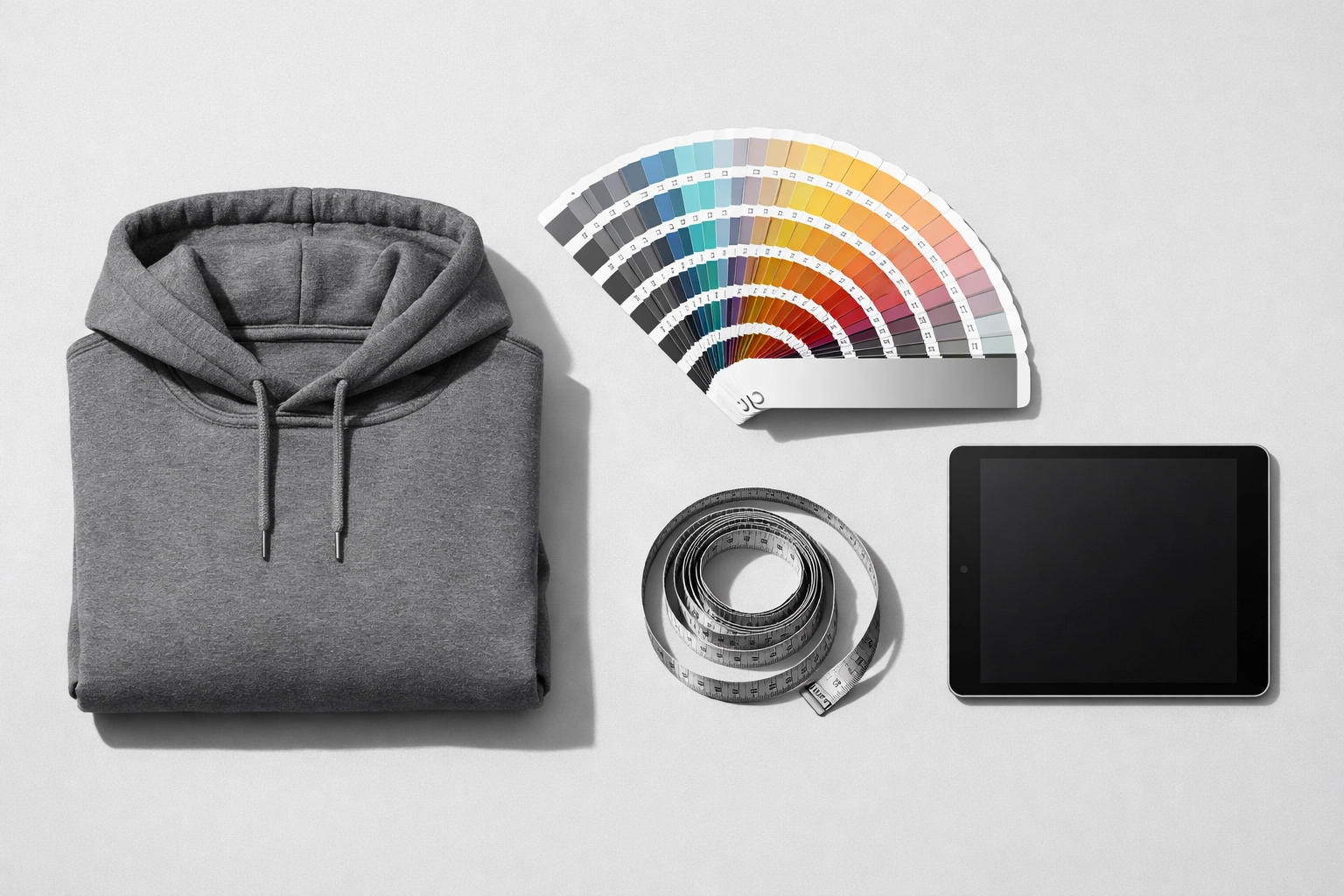
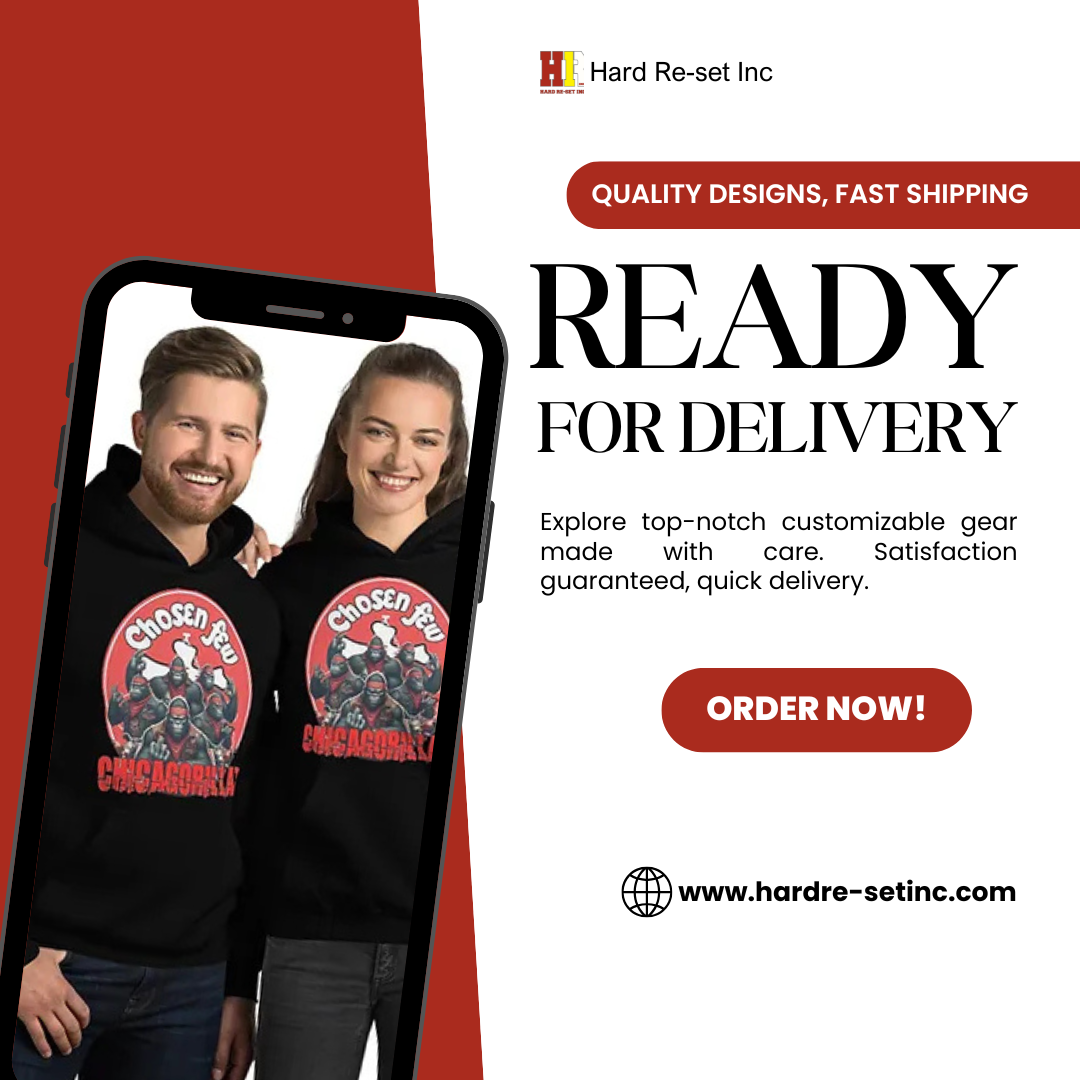
Caption: Final checklist infographic summarizing art, garments, quantities, and budget requirements.
Summary Checklist for Business Owners
Before contacting Hard Re-Set Inc., ensure you can answer "Yes" to the following:
Artwork: Do I have a vector file (.AI, .EPS, .PDF) or a 300 DPI PNG?
Garments: Have I selected a specific style (T-shirt, Hoodie, Polo) and fabric (Cotton/Blend)?
Sizes: Do I have a specific count for Small through 3XL?
Quantity: Do I know exactly how many units I need?
Timeline: Is my deadline at least 14 days away?
Budget: Have I calculated my total spend including shipping?
Preparation prevents poor performance. By following this standardized checklist, your business ensures a professional result that represents your brand accurately.
Hard Re-Set Inc. provides professional custom printing with no setup fees and no minimums. For 25 years, we have delivered quality gear to businesses, gyms, and local shops. Use the resources below to finalize your order details.
Comments